Thursday, 2 April 2020

Lola


Lola

          Her name is Lola. She is a show-off. She likes to drink a lot of wine, then she gets right out of line.
          It’s a family joke and really, I wouldn’t mind the fact that Lola drank a lot, or that when she did a torrent of foul language worthy of a Tourette’s sufferer tended to tumble from her perfect red lips. I could just about cope with the fact that she often took the Michael out of complete strangers and generally totally embarrassed me, but what really got my goat was the fact that when my sister Melanie returned to the land of the living the following morning she generally denied all knowledge of anything that Lola had done.
          Take that last night at the gîte. It was meant to be the perfect end to a perfect holiday. Two weeks of fine food, good wine and sun in elegant surroundings.
I adored almost everything about the gîte. It had been painstakingly restored by the young owners, Sisse and Simon. Its walls, sandblasted back to their original golden-ochre stone, were punctuated by shutters the colour of Cahors wine and crowned by the heavy slabs of the steeply pitched roof. Neatly trimmed vines, vigorously sending out their trellised shoots to support young grapes, stretched like an emerald sea surrounding our little Perigordian paradise. The stylish interior had everything we needed but was also kept simple, letting the beauty of the building shine through. The only jarring aspect to the whole complex was the pool, a sharp gash in the landscape, fenced off and alarmed according to new European regulations which I always thought the French took a joy in flouting.
We spent a large part of the holiday by that pool though, all except Nick, my husband and part-time eco-warrior, who had taken against the unnatural vista and spent a fortnight unsuccessfully trying to persuade us to frequent the river beaches instead. He was largely unsuccessful, mainly because it’s so much easier to contain a six year old in a fenced, gated and alarmed area.
That final morning was no exception and as the last drifts of morning mist evaporated in the heat of the sun we were to be found poolside on our loungers. Melanie and I topping up the last of our tans while we polished off the remains of the rosé, and watched Andy teaching my nephew Max to swim.
“Kick and dig. Kick and dig. Come on son, go for gold.” My brother-in-law shouted at Max over and over again.
“Where did that kick and dig idea come from Mel?” I asked. “I think I’m going to scream if I hear it much longer.”
“I dunno. It’s one of And’s things, but Max seems to get the idea. Do you fancy some lunch yet? We could use up the olives and the rillettes if you like.”

I think that’s probably when it started to go wrong. Rosé before lunch was probably not a good move, but chasing that with a bottle of red was definitely a bad idea.
I can’t even pretend that we were wine connoisseurs. We had tried to improve our knowledge of grape varieties and had trailed round vineyards with the men, doing our best to sound semi-intelligent on the subject, but it basically boiled down to it tasted red or rosé and we either liked it or we didn’t. Mostly we did like it and that was our trouble.
After lunch Peter popped over from the next door property. He was a retired diplomat who had spent most of his career in the Middle East. An interesting chap, apart from his hobby of making dye-cast American civil war soldiers, but no-one’s perfect. Peter invited Melanie and me to tour his house, and being endowed with the normal amount of curiosity for women, we accepted gladly, picking our way across the stony courtyard in our flip flops and sarongs and carrying our glasses of Chateau Nozieres.
As we were inspecting the handsomely painted General Sir William Sherman on horseback I got my first inkling that Lola was on her way.
“So Pete, what does your wife say about you spending all hours down in the cellar, fiddling with your little men? I mean, it’s all a bit anoraky isn’t it?” Melanie asked, with her usual cheeky grin plastered across her face.
“Ah, she simply despairs of me my dear.” replied Peter, totally non-plussed by her comment which was probably very tame compared to some of the things he would have heard in his long career. “Let me top up your glasses. I always have some red open down here, but keep that our little secret. She who must be obeyed would definitely disapprove.”
“You need to get out and about a bit more, Pete. I bet you’d be a right goer if you put your mind to it. Hey, do you and Sally fancy coming out with us tonight? We’re off to The Bellevue in Puy l'Evêque for a slap up meal.”
“Oh no my dear. You wouldn’t want us old fogeys tagging along.”
“Course we would. Wouldn’t we Kas? The more the merrier.” That was a definite Lola sign. Melanie never shortens my name. She knows I absolutely hate it, and now I was on the spot, forced to reply.
“You and Sally would be more than welcome, Peter. Simon and Sisse are coming too with the boys. It would be lovely to share our last night with you all.”
“Then we would love to accompany you. What time should we be ready?” Asked Peter, his eyes brightening at the prospect of company.
“We’re leaving at six. Have your glad rags on.” Melanie replied as she stepped from the cellar, blinking in the late afternoon sunshine. “Gawd, that only gives me an hour to get ready. We’d best leave you to it Pete.”

We all met up at on the restaurant’s breathtaking terrace and stood sipping our aperitifs, with their intoxicating walnut scent, as we watched the lights gradually come on over the brooding medieval town.
“Ladies you all look lovely. It’s an honour to be with you.” Peter was really a very charming gentleman. “Let me propose a toast. To warm summer evenings and good company.”
“To good company,” We all replied, chinking our glasses.
“Melanie, I love your outfit. That’s a Karen Millen if I’m not mistaken.” Sisse was something of a fashionista, and was simply drooling over the classy black silk dress, with its cut away low v-neck and hem festooned with delicately embroidered gold and silver butterflies, enhanced with sequins, beads and glittering diamantes.
Melanie laughed loudly, spluttering into her drink. “God no! It’s from Primark, but it’s a blooming good copy isn’t it?”
“Then I suppose those three inch creations in black patent are not Jimmy Choo’s either?” Sisse said and laughed as she took another sip.
“Nope. I’d never waste my money on some stupid name when I can get just the same stuff down Romford market, and it ain’t knock-off either you know.”

As we took our seats I reflected that you could take the girl out of Essex, but you would probably never quite take Essex out of the girl, never mind the fact that Melanie was now a highly successful accountant and earnt enough to buy any number of Karen Millens or Jimmy Choos.
The meal was wonderful. Pate de fois gras for starters, followed by Magret de Canard, though Nick had to be disgustingly different and go for the Tripoux, and of course, both courses were washed down by more of the delicious dark red Cahors wine. By the time we reached dessert we were all pretty lively.
“I must excuse myself folks. The little girls’ room calls.” As Melanie rose from the table she knocked Sally’s fork to the floor. “Whoops! Silly me. Never mind Sal. At least you’ve finished with it.” Melanie bent to pick it up, tottered on her stilettos and fell forwards, flipping a floppy pink silicone form into Sally’s lap.
“Bugger!” Melanie exclaimed. “Bit of a Janet Jackson moment there. Me chicken fillet has popped out. I’ll look a bit lop-sided without that.” And she proceeded to stuff the offending item back into her push-up bra.
“Are you feeling alright Melanie?” Sally asked, as she grasped her elbow firmly. “Would you like me to accompany you to the bathroom?” Sally was very no-nonsense and practical, the sort that has “True Brit” stamped on their bottom.
“No, I’ll manage.” Melanie trilled happily as she staggered across the terrace.

Five minutes later the wine was still flowing and our well heeled party was having a refined old time when suddenly we noticed that all conversation on the terrace had ceased and all eyes had turned towards the dishevelled apparition that was definitely Lola, who was slowly making what can only be termed “the walk of shame”, that agonisingly painful journey, staggering occasionally in her three inch heels, as she, completely unaware of her condition, made her way across the breadth of the terrace and back to our table with the entire back of her dress tucked into her huge, flesh coloured, suck me in knickers, instantly relegating our whole party from fine diners to riff raff.

As usual, the next morning Melanie had no recollection of the previous evening. She could not remember the restaurant and she certainly could not remember the ride home, where she proceeded to mimic Sally’s “posh” accent with a great many repetitions of,
 “Jolly hockey sticks, I’m from Essex don’t ya know.”
Needless to say we told her all about it, in great detail. Lola had her fun night out, but it was Melanie who spent the morning of our departure apologising to everyone, and the strange thing is that everyone loved her for it.


Wednesday, 24 February 2016

About Zentangles


Many claims are made for the Zentangle. This method of creating abstract drawings, using repetitive patterns, developed by an ex-monk and a calligrapher, has variously been described as a way of promoting focus, increasing mental retention, reducing stress and stimulating creativity. It’s been likened to a form of artistic meditation, hence the Zen bit, and it has been recommended for improving your mood, calming you down and as a tool for anger management.

I don’t know about the validity of those claims, but I’ve always loved doodling and have used various art forms such as Mehndi designs and Aboriginal art to teach children about line, pattern and texture, so Zentangles instantly appeal to me. I do find creating these tiny works of abstract art very relaxing and fulfilling, with the added bonus that they are quick to complete, can be done anywhere and can be put down and taken up without any planning or setting up of messy areas. Time flies when you are doing them and so they are perfect for taking on the train or distracting you in the dentist or hospital waiting areas.

So, what is a Zentangle?
It’s a miniature abstract work of art, created from a collection of patterns not meant to represent anything and without any orientation.

In its original form, it is created on 3.5 inch (8.9 cm) squares of good quality art paper, called ‘tiles’, using a pencil and a fine black pen. You don’t need to plan anything in advance, as the idea is that the creation unfolds itself one stroke at a time, and you don’t need a rubber, as, because there are no expectations, there are no mistakes in Zentangling. It is more than just doodling however, since you work with more focus, giving your deliberate drawing of patterns a great deal of attention.


How to get started:


  • Draw a border in pencil using freehand and a light touch - it’s not meant to be visible once you finish creating your Zentangle in pen. Don’t worry if it’s not straight - it all adds to the finished effect.
  • Draw a "string" inside the border - This is a curved line or squiggle that acts as a simple, abstract form which elegantly divides the border into sections to lend structure to your design. It should be lightly-sketched in pencil so as not to be visible once your Zentangle is finished.
  • Start creating a tangle. A "tangle" is a repeating pattern drawn in pen along the contours of a string. Tangles should be composed of very simple shapes - lines, dots,  circles, squiggles, squares, arcs etc.
  • One Zentangle may have just one tangle, or a combination of different tangles. Use your pen to begin drawing whatever pattern comes to you. Pencil shading or colour can be added to the tangles to create more depth and visual interest. 


Go to my Arty Scribblings tab at the top of the page for some Zentangle ideas.

My Zentangles

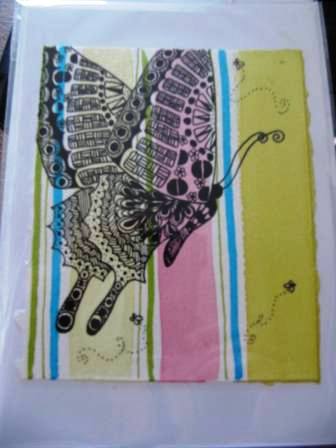
I started using some Zentangle inspired pictures as the artwork for cards to sell on our village craft stall.


Zentangle Ideas

Playing with patterns for Zentangles is great fun and there are masses of ideas at the click of a quick search, but I've gathered a few together that I like to use and posted them here.


Monday, 28 April 2014

Give the people real facts, and beer.

When you’re writing an historical novel it’s all too easy to get sidetracked by the many fascinating tidbits of information you unearth during the research stage. Well, I say ‘research stage’, but, in fact, for me that stage runs alongside the writing and editing stages too, as I check and double check on historical details.

I can’t remember when I came across this little trifle about the supposed invention of bottled beer. I suspect it was when I was looking for information about Cheapside, which features at the end of ‘Witness’ and is where I begin my sequel, ‘An Act of Treason’.

I was interested in what a late 16th century St Paul’s would have looked like, and stumbled across the name of Alexander Nowell, who held the deanery of St Paul’s for much of Elizabeth I’s reign.
Alexander Nowell
The bishops of London had a country house in Much Hadham, Hertfordshire, which gave them rights to fishing in the River Ash and Nowell, an ardent angler, indulged regularly in his favourite pastime there.

One very hot day. Nowell is reputed to have taken a bottle filled with beer and stoppered with a cork to the riverbank. To keep it cool he tied a string around it and lowered it into the river and then forgot all about it. No-one knows why. Perhaps he caught an exceptionally large fish which distracted him, but whatever happened the result was that this beer, presumably home brewed, was left on the riverbank. Nowell returned a week later to fish in the same spot, came across the string and remembered his bottle of beer. Pulling it out he took a drink, and was pleasantly surprised to find the beer much changed and even improved, describing the sound of the cork coming out as that of a gun.

The changes he noticed would probably have been it turning fizzy, as Elizabethan ale was generally fairly flat. Secondary fermentation in the bottle probably caused a build-up of carbon dioxide, which would account for the loud pop when Nowell pulled the cork out.

The whole incident is reputed to be the accidental discovery of the benefits of bottled beer, though it is likely that brewers were experimenting with storing beer in glass bottles in the latter half of the 16th century. It’s lucky that Nowell came across his string within such a short time though, as the yeast in the beer would continue to ferment, causing the bottle to eventually explode.
Finding this snippet of information sent me on one of my many distracting research sessions. I liked the idea of the dean of St Paul’s inventing bottled beer and wanted to include it somewhere in the book. I decided to have my actors presented with a crate of bottled beer, but was not sure would have been possible. What would it have been bottled in? Part of the problem was that the hand-blown glass bottles of the time would not have been able take the pressure of all that fizz.

In 1615, the English poet Gervase Markham wrote ‘The English Huswife, Containing the Inward and Outward Virtues Which Ought to Be in a Complete Woman’. In this he advised housewife brewers that when bottling ale they “should put it into round bottles with narrow mouths, and then, stopping them close with corks, set them in a cold cellar up to the waist in sand, and be sure that the corks be fast tied with strong pack thread, for fear of rising out and taking vent, which is the utter spoil of the ale.”

So would my crate of bottled beer need to be a box of sand, and would the bottles be blown glass or stoneware?

You’ll have to read ‘An Act of Treason’ to find out whether I decided to include bottled beer or whether this was one of those details which fell by the wayside!


Wednesday, 2 April 2014

With a Little Help from…

In my last post I mentioned the great support I get from my family. Well, to misquote a Lemony Snicket title, I’ve experienced a series of fortunate events… which has resulted in a fantastic book cover for my sequel to Witness.

My sister was having a conversation with an IT contractor in her office and I guess somehow my writing came up, or maybe it was how I was trying to create my own book covers and asking my family’s opinion on which version was the best. Anyhow, the IT bod commented that his wife was a graphic designer and could design something for me, and she’d do it for free. How fantastically fortuitous is that?


So here is my new book cover and I love it. Thank you, thank you, thank you to Tanya Esterhuysen. Now all I have to do is finish my final proof read and get An Act of Treason out there.


Wednesday, 26 March 2014

'Tis not enough to help the feeble up, but to support them after

- William Shakespeare

Funnily enough, just before notification of Helen MacKinven’s latest blog-post popped up in my in-box, I was browsing through this year’s little brochure for Arvon Foundation Creative Writing Courses. I’m too late to get on anything this year, but there’s one particular course I’d have loved to go on, tutored by Malorie Blackman (‘nuff said), but as I am currently unwaged (by choice) I’d feel guilty spending such a lot of money. The same goes for a creative writing MA, which I’d love to do.

Helen’s blog asked:
    Was your creative writing course worthwhile? Do you feel the need for support from a writing group? How do your family and friends support your writing ambitions?

It made me think. I began to write a comment to add to her blog, but it grew and so ended up on my blog instead!

I’m very lucky with my family support, especially that of my husband, who is tolerating my unwaged state and giving me room to try my hand at this writing game. My wider family also provide support and are proving to be valued readers and marketers of my books. Their clamouring for the sequel to ‘Witness’ has given me confidence that my writing has wide appeal, as I know they wouldn’t bother with it if it were not their sort of thing.
My family support!
As to creative courses, well, I’m a teacher, of course I believe you can be taught something. You can be given the skills, then let loose to see where your creativity and determination can take you.

In July 2009 I went on an Arvon course led by the authors Jill Dawson and Kathryn Heyman. I found this exceptionally stimulating. What gave me the biggest buzz was living and breathing writing with a group of like-minded people. This group proved to be of great support in the ‘you can do’ style of things, and we still meet up a couple of times each year, which has the effect of spurring me on, especially since a couple of folks (Deborah Meyler, Cherise Saywell) have now published great books.


Two life changing decisions came directly from doing that creative writing course. I resigned my job as a deputy head and took off in a small van on a tour of Europe with my husband and dog. At the same time I was mentored by Kathryn Heyman as part of  the Gold Dust mentoring scheme for writers. Jill Dawson likens Gold Dust to a fast track MA in creative writing. I can’t say how true that is, and there’s an interesting blog about it here, but Kathryn certainly taught me much about structuring a novel, tightening up the writing and strengthening the characterisation and dialogue.

I think it’s possible to teach yourself writing, but I am also certain that you can get there by a less tortuous route with a bit of well-placed tuition/direction/mentoring. Someone pointing out the plot holes, the clichés and, in my case, quite how often your characters wink at each other, keeps you on a better writing path.

At the present time, much of my writing support comes from the ‘Writing for Children’ branch of the Cambridge Writers Group. This group is good at critiquing work, and I value their excellent commentary. They also spread the word about writing events in my area and it’s more companionable to attend events with a few familiar faces.

Not all writing groups support in this way, I know. The last group I attended (OK, ran) had less experienced writers as members, and we were rather more the blind leading the blind. Even so, we did writing exercises each week, and that in itself was incredibly stimulating for me and I produced a lot of writing which led to short stories and starts of novels (to be continued at a later date!)
Pieter Bruegel's 1568 oil painting, often called The Parable of the Blind,
Perhaps it depends on your personality. Some people get on better working in their little garrets, agonising over their writing until they produce masterpieces, others find their ideas flow better when they have someone to talk to. I think I am the latter type of writer. As I spend a fair amount of time on my own, sat in my study, I am considering trying to build more online writing support for myself. My writing group meets monthly, and in between sessions I could do with more than my husband to bounce ideas about with and to comment on chapters. He’s a fantastic proof-reader, but he concentrates on the linguistic side and I need people to get into the story. I’ve not found quite what I’m looking for as yet, but hopefully I’ll know it when I see it. Any suggestions would be most welcome.


Monday, 20 January 2014

Where do you get your ideas?

Where do you get your ideas? It’s a stock question when interviewing an author, not that anyone’s asked me yet! However, it’s best to be prepared, so to celebrate the launch of my first novel, Witness, I’ve had a little think about where the ideas for the book came from.

Neil Gaiman says his answer to this question is, ‘I make them up. Out of my head.’ – but admits that it tends to make interviewers unhappy. He goes on to explain that he gets his ideas from daydreaming and asking himself ‘what if…’ questions, which pleased me no end, as that’s what I do.
St Swithin's pre-1880

I can trace my ideas for my first novel, Witness, back 30 years to a post-university stint on a history research project at the University of East Anglia when I was asked to produce a pamphlet about St.Swithin’s Church, also known as the Norwich Arts Centre. St. Swithin’s had an association with the medieval tanner’s guild and this sparked off an interest in cloth preparation, so when I joined a creative writing class in 

St Swithin's today
Leicestershire and was set homework to write the first chapter of an historical novel, I started off with Matthew Reed’s stomach lurching at the smell of urine as he entered a fulling mill on the banks of the River Ver in St. Albans. Editing moved this scene to chapter four, but this was where idea for the whole book started.


The creative writing class got me hooked and when it finished I started a writing group with some of my fellow participants and my historical novel developed. In stowing away on his father’s cart, Matthew’s dream had been to get to London. One obvious place for his father to sell his cloth was Cheapside and during my research I stumbled across an article on an American blog which mentioned the ‘Cheapside Horde’. This remarkable collection, now the feature of a major exhibition at the Museum of London, is regarded as the greatest cache of Elizabethan jewellery in the world. In 1912, workmen demolishing a 17th century building discovered a decaying wooden box beneath a brick floor. Stashed there by some long-forgotten goldsmith, the contents of the box included over 500 pieces of 16th and 17th century jewellery of the type which would have been worn by wealthy merchants and their families rather than the aristocracy.

The Cheapside Horde
The idea of this jeweller stashing his wares under his floorboards took hold in my mind. What had happened to him? Why had he never gone back to collect his box? Perhaps he was murdered and he’d never even told his wife where his riches were hidden, and so my goldsmith, Thomas Hyckes, was created as the maker of this jewellery. In early versions of Witness, I had Matthew and his father, John, examining the jewellery and buying it as a gift for Matthew’s mother, but this got lost in the editing process and instead Thomas Hyckes became the friend in London to whom John Reed could turn when Matthew finds himself in danger. The Cheapside Horde is not in itself mentioned in the novel, but we do see, or rather hear, Hyckes carefully putting his stock away somewhere secret in his workshop on the corner of Friday Street and Cheapside.


As the novel progressed I wanted to learn more about the craft of writing and so booked myself on an Arvon course with the authors Jill Dawson and Kathryn Heyman. We covered a huge amount in our week of workshops and writing, and I learnt a great deal about developing characters and about the underlying structure of a novel. I decided that Matthew was on a journey, both in an emotional and physical sense, and created a map of where I wanted him to travel, which ended up stretching from London to Waltham Cross. I’m a very visual person, and so this map, made up of pages printed from Google Maps and glued together, was where I pinned bits of research associated with Tudor England and places along the route of the Old North Road. Much of this went into the second of Matthew Reed’s adventures, some of it never went anywhere other than the map, but one bit of research which made its way into the first novel, Witness, was about the Eleanor Crosses, which ended up featuring at several points during the novel.

Waltham Cross
Charing Cross


The inclusion of the Eleanor Crosses is largely down to family living near Waltham Cross, where a fine restoration exists of one of the twelve memorial crosses Edward I erected along the route of his beloved wife Eleanor’s funeral procession between Lincoln and London in the 1290s. This cross interested me originally because of its similarity with the one standing outside Charing Cross Station in London, which I had passed on many an occasion during my later teenage years - Charing Cross being my entry point to central London nightlife from the suburbs. In Witness, the Eleanor Cross link begins with Matthew and the playwright, Richard Beaumont, in their scene in at the foot of the Eleanor Cross in St. Albans.


The inspiration for writing can come from various places. Thankfully, writing what you know does not mean that you have to stick to things within your life experience. If it did I’d write mostly about school, children and dogs. To me, writing what you know means using your experiences in your writing. A major part of Witness was written while travelling round Europe for a year in a small van with my husband and our dog. Lots of small details from this modern day trip ended up accompanying Matthew in his journey. I studied a man fly fishing on the banks of a river in Luxembourg, and this, filtered through research on the history of fly fishing, found itself a tiny place in Tudor St. Albans. In Poland most places we camped seemed to have stands of silver birch, and we collected fallen branches for our camp fire. I noticed that when the bark was peeled back it left a beautiful pale pink wood shining beneath. It also left brown stains on my hands. Some of these details made their way into parts of the novel.

Often the ideas you start with spiral off into new places. In fact, it can become difficult to keep track of your research as you flit here there and everywhere, chasing your thoughts. It’s a fascinating process, but there’s an inherent danger of it all taking over your writer’s life to such an extent that little writing gets done. Blogging can be a bit like that sometimes, so I’d better stop now and get back to my last bits of editing on the sequel to Witness. I’ve yet to decide on the title, I still have a cover to produce and I need to get back to writing my Iron Age novel. 


Monday, 4 November 2013

Another Year, another NaNoWriMo

I’ve gone and done it. I’ve signed up for a second year of NaNoWriMo in the hopes that it will boost my productivity. It’s ridiculous really. I wrote last time in this blog about procrastination, yet I know I can put in the hours and achieve huge chunks of writing – pleasing writing, that I am more than happy with as a first draft – in a relatively short time, when I set my mind to it. However, it seems that I work much better to a deadline. I’ve always been the same, whether it was essays at uni, or my very long list of projects for work, I become much more productive the closer I run to the line.

My new novel is no different. I wrote my first chapter ready for critique by the writing group in early October – 920 words done. I sorted the plan out in mid October and wrote my second chapter, again ready for my writing group deadline, a week later – another 1423 words written. Today I sign up for NaNoWriMo. It is the 4th of November and NaNo has been going for 3 days. I am already behind. I sit and write, despite the disturbing sounds of builders fitting external insulation to the row of council houses down my street, and lo and behold I have completed 6,026 words. Slightly less that I need to keep on my NaNo track, but at this rate I might even finish early, after all, I only have 43,974 to go. 

Oh, and this blogpost adds another 300 words to my NaNo word count, because one of the good NaNo tips I’ve picked up is that you should include any and all your writing for the month of November. I wonder if that means job application letters too?

Sunday, 20 October 2013

Procrastination is my Middle Name

Actually, it’s Karen.

I’m not sure if I was named after the actress Leslie Caron, but I’ve always blamed her as the namesake who doomed me never to be elfin or sylph-like. Oh, but that’s a whole other story – see what I mean about procrastination?

I mentioned in my last blog post that I was starting a fresh project. In between sending off my first novel to agents and publishers and draping the dust sheets over its sequel, I’ve been researching and plotting my new novel.

The opening sentence came to me in the middle of the night some time in September, and was quickly followed by the first chapter and the character of my protagonist, who will be living with me for the next few months, but since then I haven’t written a whole lot more. I haven’t even made changes to this first chapter following some excellent suggestions and comments from the children’s writing group I go to. 

I’ve researched plenty though. I love researching. I love the way one pathway can lead to another, sending me on a voyage to so many interesting places, but for me it is also a trap of procrastination and I think I’ve fallen into it.

Google is also my biggest distraction, and while in theory I could just not use it, could even turn the router in the cupboard off, I don’t. I sit and play on the computer. Oh, I don’t play games. No Candy Crush for me. I can’t allow myself to get into that. It’s bad enough that I have Yahtzee and Rummy 500 on the computer. No, I follow weird and wonderful Google searches, which take me to interesting sites where I learn what zentangle is or where I get sidetracked by articles about 80s bands.

How much I procrastinate came home to me quite powerfully when my husband and I took ourselves away in our little van for a few days.
Beautiful Northumberland - Dunstanborough Steads
Just the process of travelling up to Northumbria in early October provided valuable ponder time. I learned the importance of mulling over the story when we pootled off in our van for our ‘Big Trip’ in 2010. Drive time (husband driving) lets my brain tick over. It might look very similar to procrastination, but it’s not. Plot lines are being developed and sentences are rehearsed. Sometimes I even remember them and write them down.

Husband reached Scotland
By far the best thing about being in our van though, in terms of my writing, is the absence of an internet connection. Our ‘Big Trip’ was when I got most of my Tudor novel written, over many, many days with no internet, so I hoped that this week in October would help me develop the plot, and the perfect opportunity arose in the form of a whole day when my husband went for a bike ride (Beadnell Bay to Kelso), leaving me and the dog in the van with, importantly, no internet to distract me.

There were potential distractions, I’ll admit, but really, there are only so many dog walks on the beach I’m prepared to do in a day, so it was just me, the computer, my notebook, two packs of felt tip pens (fine and broad tips), coloured post-its, a Prittstick and some A3 paper. Have I mentioned that I’m a primary school teacher by profession? It might explain my approach to planning and my choice of tools.

Pommie shows no interest in my writing

I began by gluing 3 sheets of A3 together, and set out my plan based on the ‘Ten Scene Tool’ I picked up from a useful book – The Writer’s Little Helper by James V. Smith, Jr. This is where the post-its come in. One colour is for the most important ten scenes in my story – only I can’t quite get mine down to ten. Twenty-seven scene tool doesn’t sound as snappy, but the post-its are a lovely lime green. Alongside the plot post-its are another set for characters (bright blue), which I can add to as I decide on names, ages, looks, personality, personal journey – whatever. I also have (white) post-its for miscellaneous ideas to address, research to undertake when I eventually get back to the internet or questions to answer.


It took me the whole day, and many post-its bit the dust en route, but by the time the cyclist returned I’d cooked a delicious soup and sorted out the basic plot details. No internet meant no procrastination. I was very pleased with myself.

Last November, for NaNoWriMo, I found it so much easier to crack on with writing 2,000 words a day after I sorted out my plot, so my expectation on returning to South Cambridgeshire was that I would do the same. Have I? Not a chance. How many words have I written? A big, fat zero. Do I have excuses? I’ve had a nasty cough and cold, but it hasn’t stopped me sitting at the computer. I’ve been here, with the internet. I’ve found out why the dog might be biting her bottom (trust me, you don’t want the results of that search). I’ve found lists of books to attract reluctant readers. I now know how much vaguely Art Deco bathroom suites cost, and that a turmeric/honey mix is reputed to be very effective in easing a hacking cough (it does, but tastes completely disgusting, especially if you let it get cold).

You see, I’ve been procrastinating. Maybe procrastination is actually my first name. Procrastination Hale – it sound quite Amish, don’t you think?


Sunday, 1 September 2013

Starting a New Novel

I’m excited to be starting a new project, but with several ideas banging about in my brain, choosing ‘the one’ to run with has been difficult. I’ve wanted to do something with the 3,000 words I wrote on an Arvon course. It centres around my grandfather and the East London docks, and works as a character study, but I haven’t yet got the whole story worked out. There’s also the first chapter of a children’s novel about a half-goblin who’s a detective, which my nephew keeps asking if I’ve continued. If that’s caught his imagination it should be worth taking further, but at the moment I’m rather taken with the Iron Age, so have plumped with that for my new novel, in the hope that the revised primary history curriculum will need some fresh children’s books.
An Iron Age torc will feature in the plot.

Even though I studied history, I know little about the Iron Age, so getting stuck into a completely new era is great fun and odd bits of information I come across spark off new ideas for the plot, though the plotting itself remains the slow bit for me. Once I’m into the writing things seems to flow quickly, but I agonise for ages over the story line, regularly waking in the middle of the night with ideas. I’m considering trying my hand at NaNoWriMo again this year, which gives me just one month to sort myself out with the story.

It’s all early days, but it is proving a lot harder than starting a sequel, which is what I did last year for NaNo. Just knowing all my characters back then, as well as the world they inhabited, made the task so much easier, so one thing I have to do early on in the whole process is dive into some writing to get to know my main character. It might be something I never even use, but unless I get a protagonist down on paper and start living with them I can’t seem to sort out ‘stuff’ for them to do.

I know about Medieval villages. How different will an Iron Age village be?

I’m also drawn to making a map of where the story is to take place. I did this for my Tudor novels and, as well as helping me with the world as it was in 1594, it helped me match my protagonist’s emotional journey to his physical one. For this, as yet untitled, Iron Age story, part of which will be set in the present, I need something which also includes a bit of geological detail. I’m on the hunt for chalk and I daresay I’ll be using a fair few post it notes on the map as I build up my world, past and present.

One thing is for sure, there’s masses to do and I can’t afford to keep putting it off until tomorrow. I stopped writing after NaNo last year, as starting a new teaching job took up all of my time, and it has been proving harder than I thought it would be to get back into the swing of it. At the moment I have much less on my plate, so there are no excuses, I’ve just got to get my head down and crack on. Now, where’s that map to print out?

In this book I plan to spend time somewhere on the Icknield way.


Monday, 12 November 2012

NaNoWriMo and Distractions Galore


Edgar Allen Poe may have continued writing through joy, sorrow, hunger, thirst, sunshine and moonshine, but I know for sure he never had the distraction of deleting his entire iTunes library from a computer and then finding only half of it remained in the recycle bin. That was my big distraction on Sunday 11th November. I guess I could just sync to the iPod, but I only ever listen to the music on my laptop, so haven’t bothered to update it for two years and don’t want to lose anything I’ve added in the meantime.

He's going be a new character in my novel.
Anyway, them’s my computer woes, and they came after going to a family birthday on Friday night, staying up late imbibing too much and not writing on Saturday. So a grand total of 942 words ended up being written over the weekend, putting me 2K behind, which I should be able to catch up on this week (crosses fingers).

My other big distraction is research. This NaNo novel is a sequel to my first Tudor novel, so I know most of my characters very well and, having taught the Tudors for many years, I am fine with the period. But wouldn’t you know it – the characters are all going to new places, travelling by modes of travel they didn't use in the last book and even meeting people who don’t speak the Queen’s English, and all of that requires research.

So far I have researched accusations of witchcraft, symptoms and treatments for gout (oil of stag’s blood and poultices which cause dreadful blisters were two suggestions), the start of ‘tulipmania’ in the late 16th century, sea journeys and Dutch ports, the city of Haarlem, 16th century Dutch names and Dutch vocabulary. You can spot a theme building there, I’m sure.

I love the research. It’s all great fun. However, it does consume vast amounts of time and that is holding up my NaNo word count. Luckily, I am on my own in the house during the week and not due to hold down a proper job until January (fingers crossed again), so I will have the time to do this.

I am pleased with the way the story is developing, and I started this novel with a plan, unlike the first one, where the planning began somewhere after chapter four. I am resisting the urge to edit, which, I have to say, is helping the story flow, even if, when I do look back over the pages, I do wince a bit. This is advice I’ve read from many an author – get the story out there, edit later.
Dutch river scene
As part of NaNoWriMo, I have joined the local Cambridge writing community on the NaNo website and on Facebook. I even ventured along to a ‘write-in’ at the CB2 café in central Cambridge and met a lovely bunch of writers. However, I seem to be more productive writing at home, in my lonely garret, which is actually a lovely, refurbished study with views of the garden courtyard and its out of place palm tree (not my garden design, I hasten to add). Maybe I should try meeting the Wrimos (or is that winos?) at their Wednesday evening social meets? Oh no, that requires being brave again!
My garden view